Pallbearers Debate
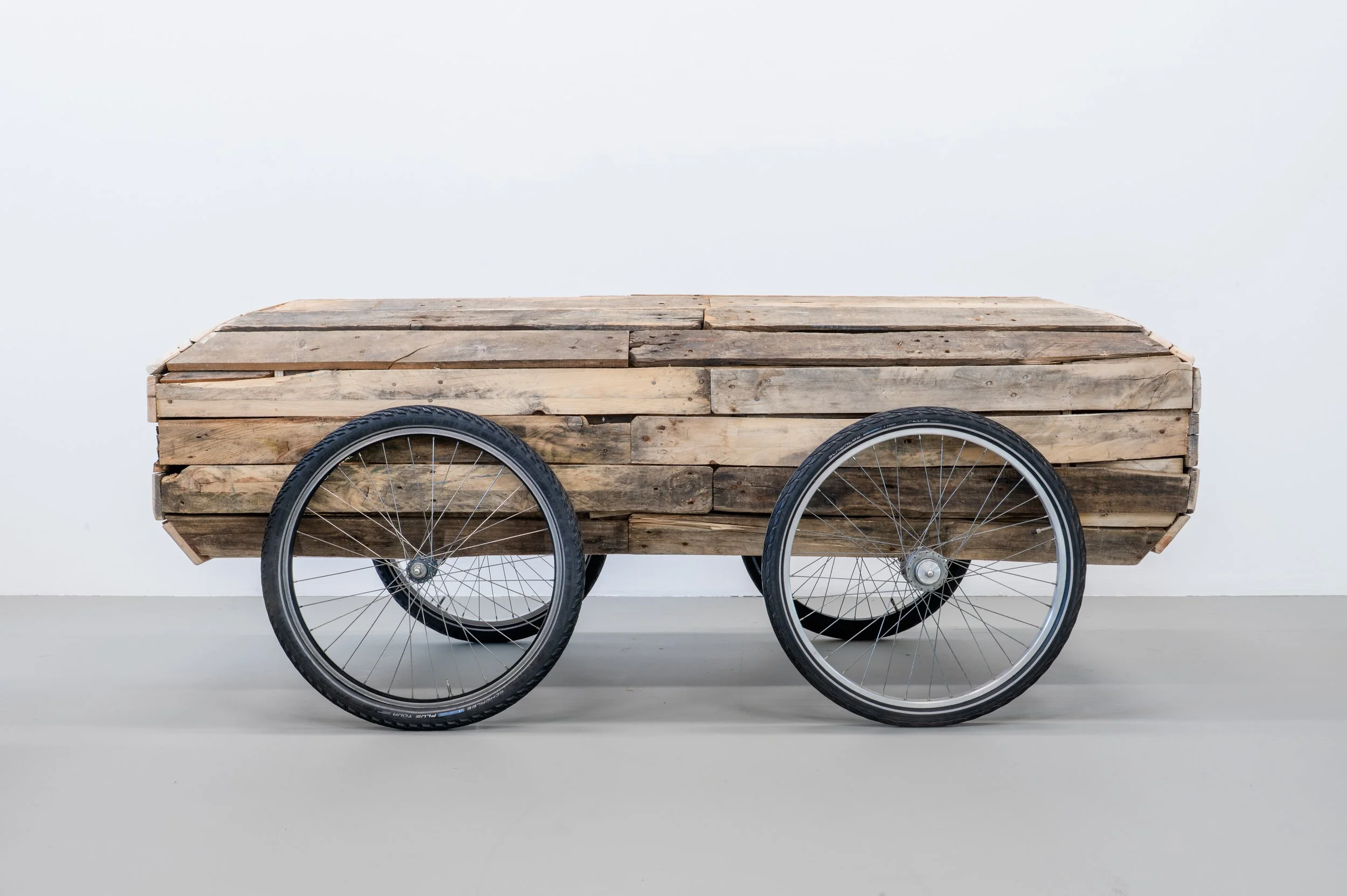
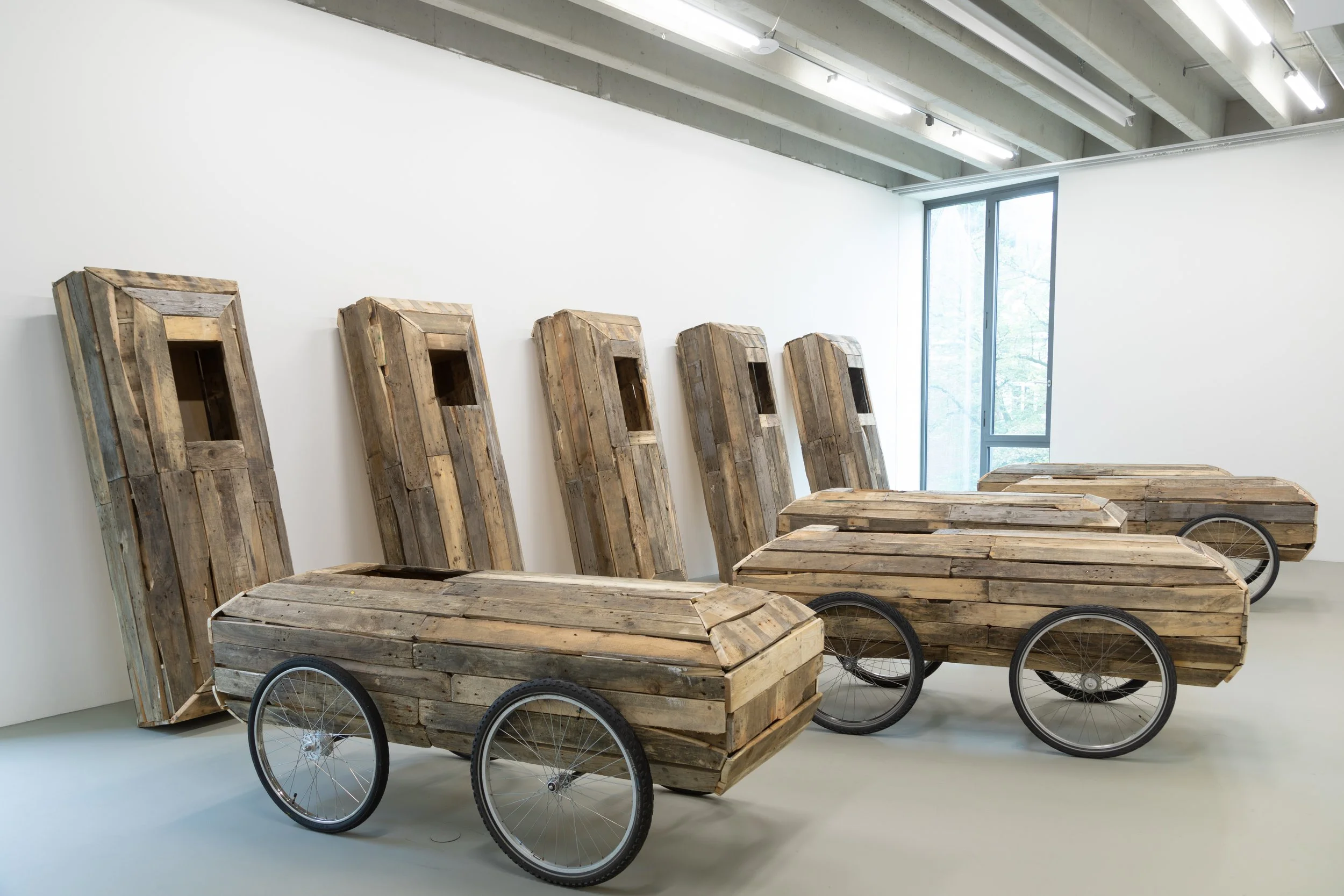
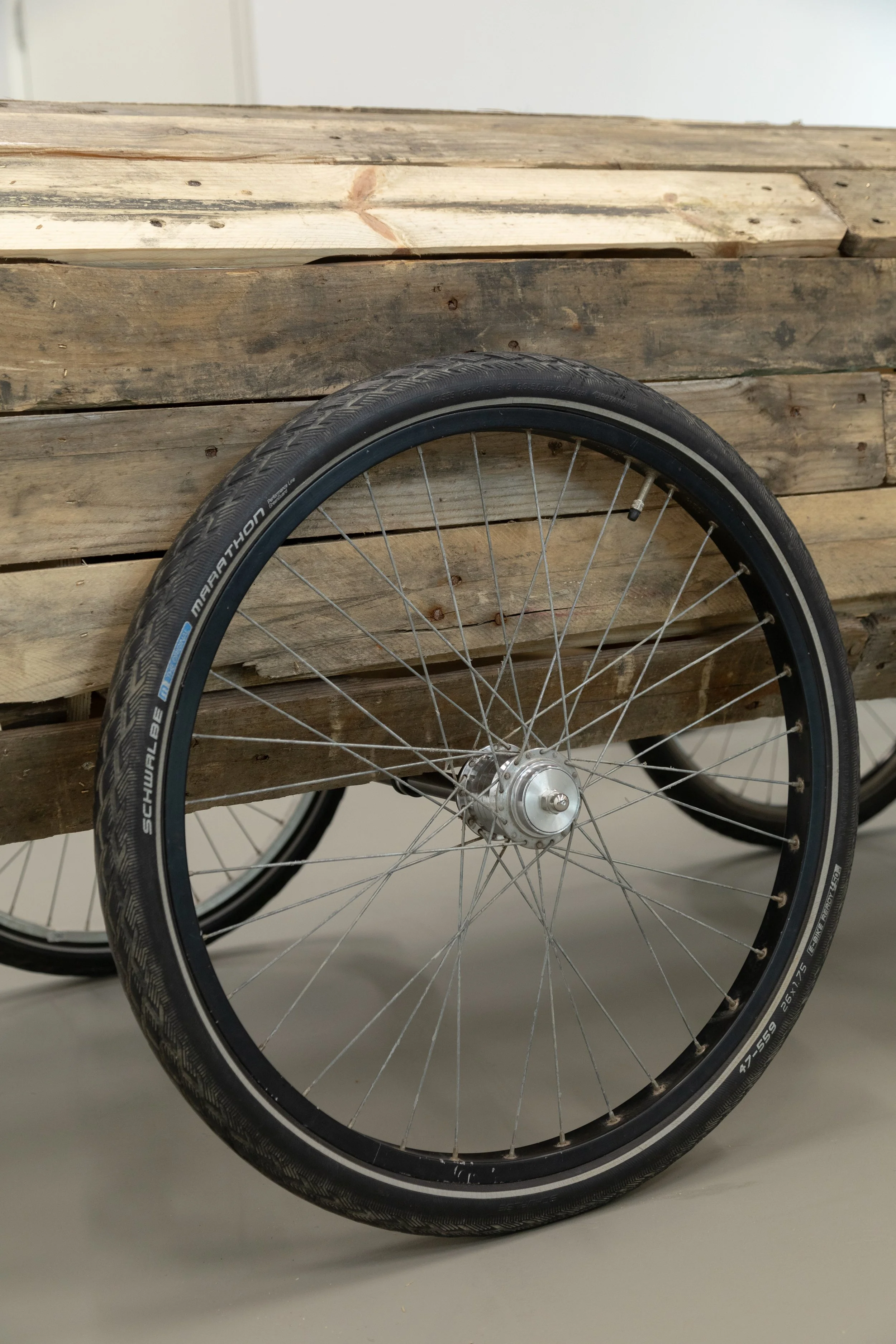
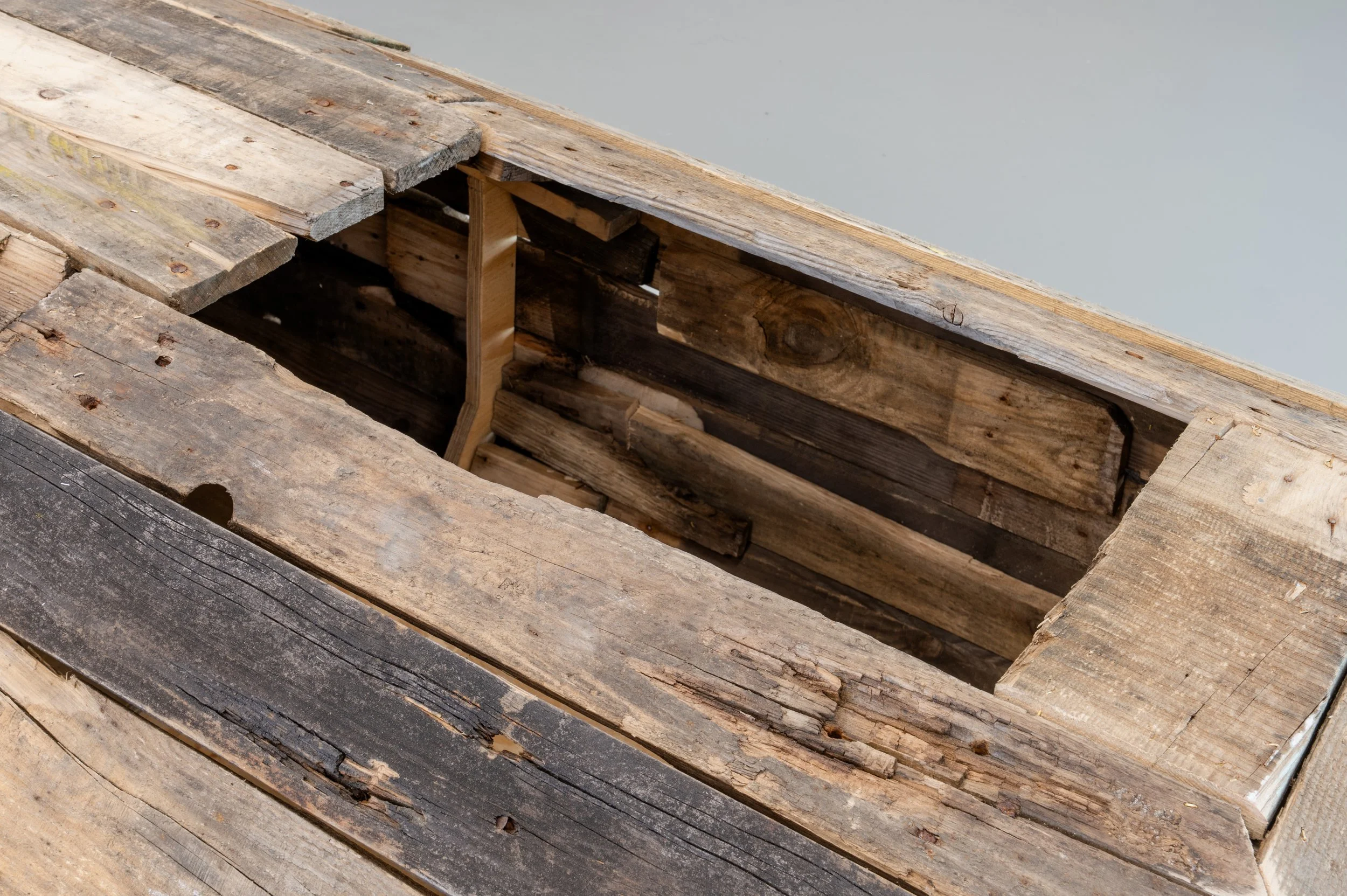
Installation size:400×700×200cm, size per coffin:200×60×80cm|found transport pallets|found bicycle wheels|metal fittings
Metaphorically, pallbearers represent the act of shouldering, supporting, or finalizing a heavy emotional burden. The art installation delves into the complex and sometimes bizarre realm of funeral rites in post-colonial Kenya. "Pallbearers debate" takes a unique angle within the dilemma of (the preservation of) traditional Kenyan practices and cosmopolitan modernity. This bridge between intense religious experiences, traditional customs, and the host country's laws can interfere with mourning processes and functioning within the diaspora community. The work explores the practice of dead body repatriations to ancestral land for burial among Kenyans in the diaspora as a need to fulfil the traditional customary burial rites, which raises questions such as: Who has the right to care for the deceased and decide on the final process? How do ancestral conventions and modern realities influence one another or potentially clash? What does it mean to bury someone away from their homeland or - vice versa - to have no memorial site of the deceased in the country of diaspora? Dynamics of migration and mobility seem to counteract traditional belief systems, which intertwine the dead with home soil.
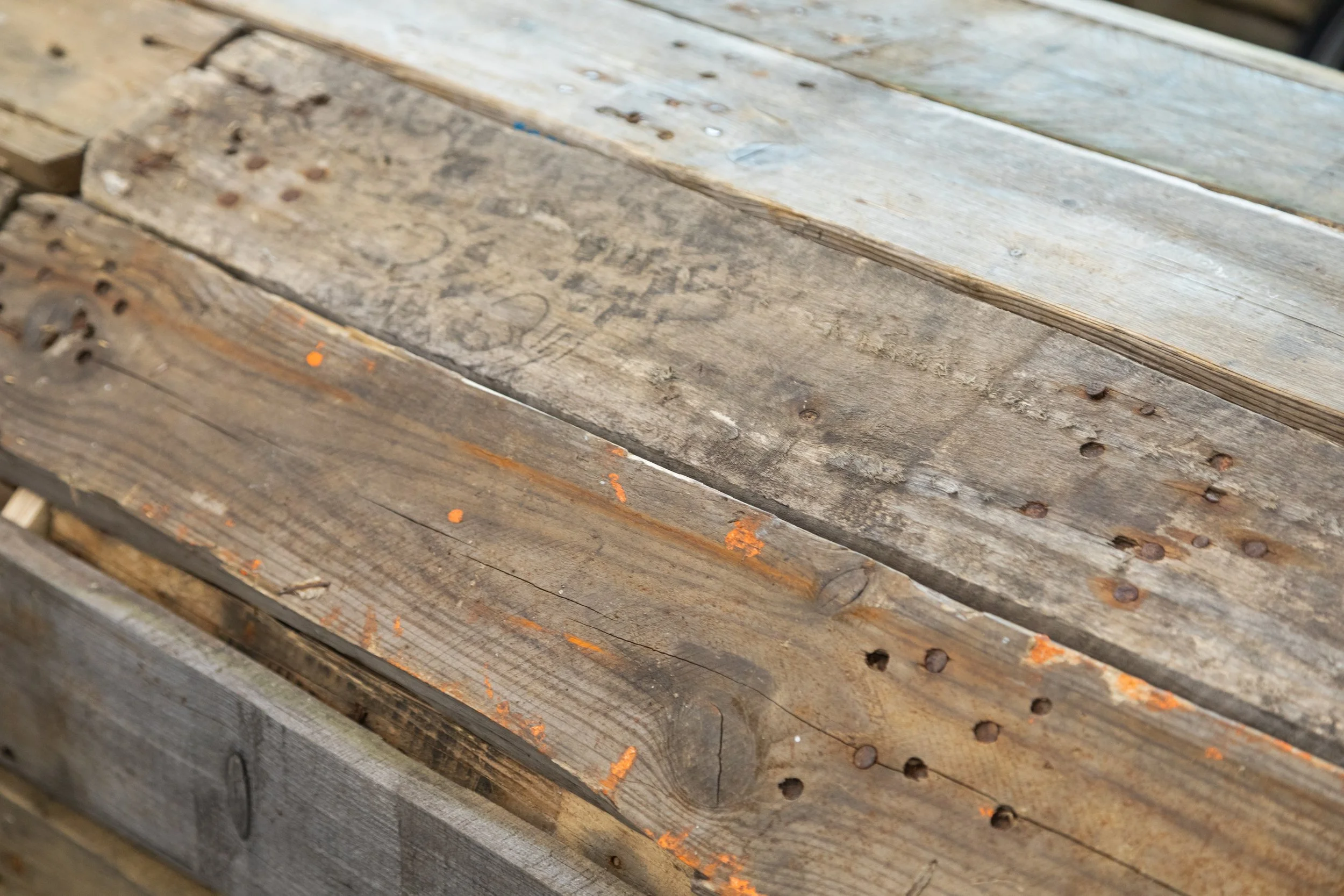
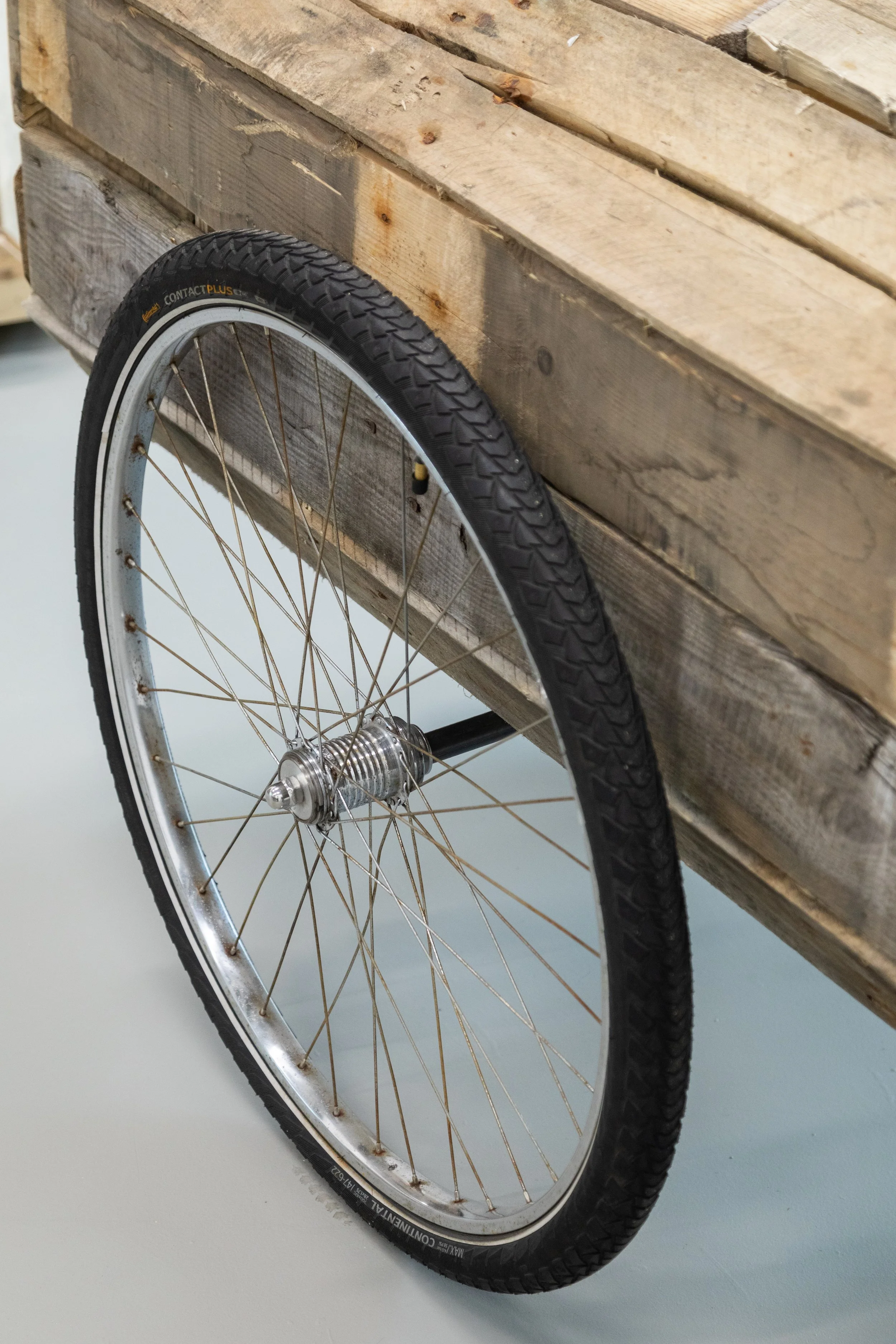
"Pallbearers debate" uses coffins with a typical Kenyan design. They are made out of pieces of aged timber planks from transport pallets found at the shipyards at the Hamburg harbour, thus combining elements of globalization and movement with traditional forms on a material level. The found bicycle wheels pick up implications of motion and the difficult position of the modern pallbearers - who are to be understood symbolically - between continuity and change. The work interrogates postcolonial Kenyan traditions within the context of diasporic movements and accompanying challenges.
Images courtesy of charlotte Spiegelfeld & Maximilian Glas